IOT Platform

IoT Platform for Device Management and Real-Time Monitoring

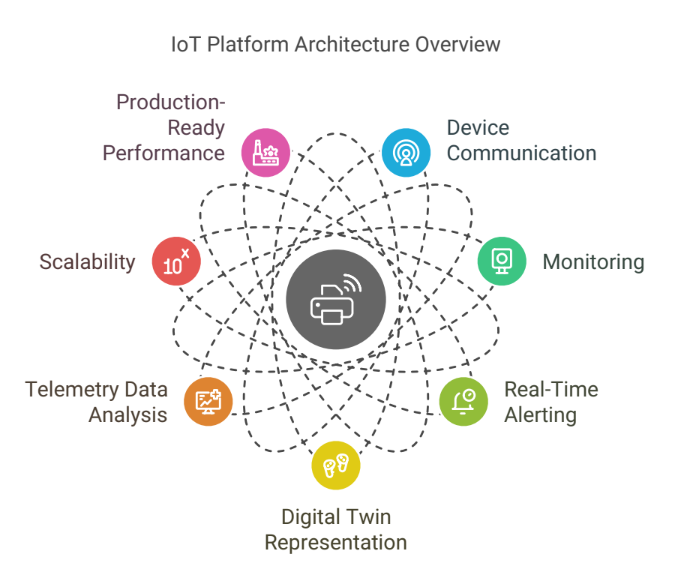
The IoT platform was designed and implemented to provide efficient device communication, monitoring, and real-time alerting using the Open Source CloudEdge Package (Hono, Ditto). This platform enables seamless management of IoT devices, digital twin representation, and high-frequency telemetry data analysis. By leveraging Docker, Minikube, and modern database solutions, the platform ensures scalability and production-ready performance.

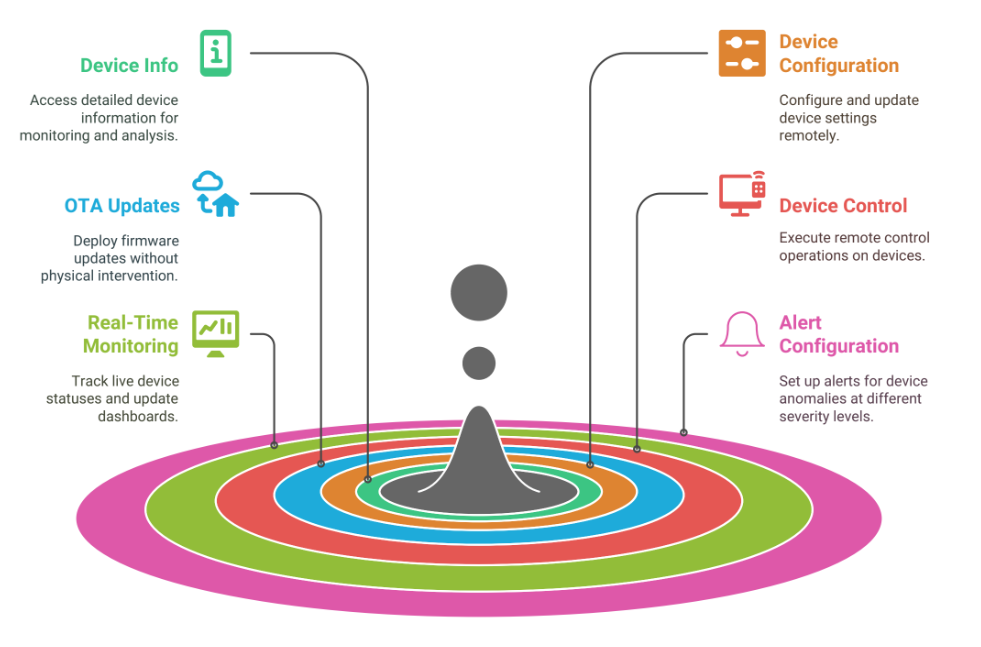
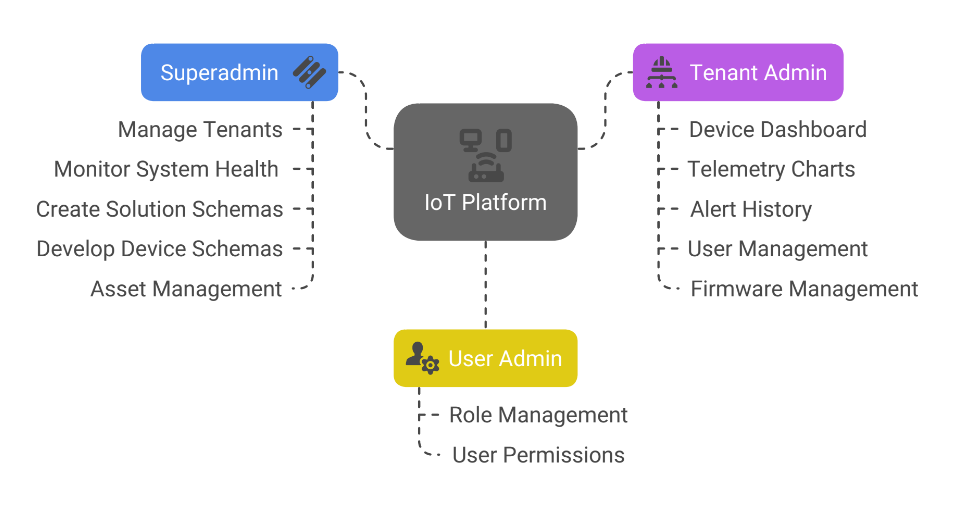
The IoT platform is designed as a multi-tenant system with a single solution approach, featuring three administrative roles: superadmin, tenant admin, and user admin. Superadmins can manage tenants (add, edit, delete, and view), monitor system health (including resource usage), create solution schemas to define the framework, develop device schemas to facilitate device addition, and handle asset management by assigning devices to the appropriate tenants.
Image

Objectives

  • Improve Data Management:
    Store and manage user and telemetry data using robust database solutions.
  • Enable Real-Time Device Monitoring:
    Implement an IoT system capable of tracking device statuses and generating alerts for changes.
  • Enhance System Scalability:
    Deploy the platform using containerized environments to ensure easy scaling and maintenance.
  • Implement Digital Twin Management:
    Use Eclipse Ditto for creating and managing virtual representations of physical devices.

IoT Platform Administrative Roles and Functionalities

Image

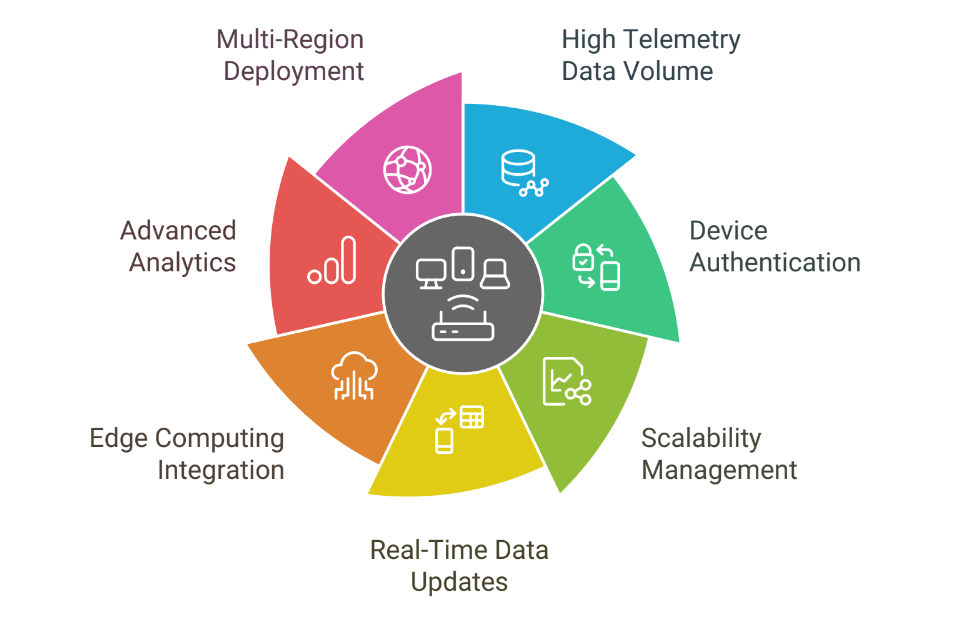
Challenges and Solutions

High Telemetry Data Volume: Used InfluxDB for time-series data storage.

Device Authentication: Implemented secure device onboarding using Eclipse Hono.

Scalability Management: Utilized Docker containers and Minikube for horizontal scaling.

Real-Time Data Updates: Employed WebSockets for instant device status communication.

Device Management

Image

Solution Architecture

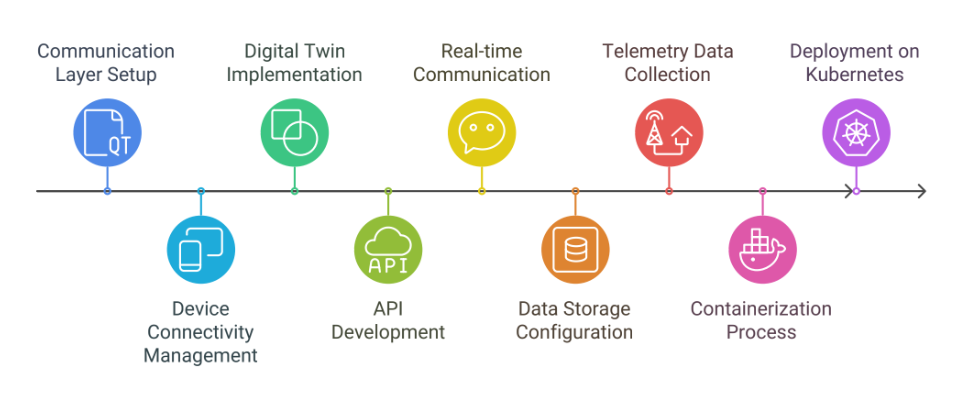
IoT Solution Architecture Sequence

  • Protocol: Utilized MQTT for lightweight, real-time communication between devices and the backend.
  • Eclipse Hono: Managed device connectivity, authentication, and telemetry ingestion.

Eclipse Ditto: Implemented virtual representations of IoT devices, enabling device state tracking and remote control.

  • Python Flask APIs: Developed RESTful APIs to handle device registration, status updates, and retrieval.
  • WebSockets: Established real-time communication for live device status updates.
  • PostgreSQL: Configured for structured storage of user and device metadata.
  • InfluxDB: Used for time-series storage to handle high-frequency telemetry data.
  • Telegraf: Collected and transmitted telemetry data to InfluxDB.
  • Docker Containers: Containerized the entire system for consistency across environments.
  • Minikube: Deployed the IoT platform on a local Kubernetes cluster for testing and scaling.
Image

Implementation Steps

System Design

  • Designed a microservices architecture to manage separate components (messaging, data storage, APIs).

Device Connectivity

  • Configured Eclipse Hono to authenticate and receive MQTT messages from IoT devices.

Digital Twin Creation

  • Leveraged Eclipse Ditto to map physical devices to their digital counterparts.

Data Pipeline

  • Set up Telegraf for ingesting data into InfluxDB while maintaining metadata in PostgreSQL.

Real-Time Monitoring

  • Implemented WebSockets to broadcast device status changes and trigger alerts.

Containerization

  • Dockerized the platform for consistent deployment across environments.

Kubernetes Deployment

  • Deployed the platform in a Minikube environment for scalability testing.

Key Acheivements

Future Scope

Edge Computing Integration: Implement edge nodes to process data locally before transmission.

Advanced Analytics: Enhance predictive maintenance using advanced ML models.

Multi-Region Deployment: Deploy the platform across multiple regions for global IoT management.

Image

The IoT platform provides a comprehensive solution for real-time device management and monitoring. By combining modern IoT frameworks with containerized deployment, the platform is scalable, secure, and capable of handling high-frequency telemetry data. This system enhances operational efficiency and lays a strong foundation for future IoT innovations.